
In a world where the dramatic effects of global warming on land dominate news headlines, there is a tendency to overlook the massive impacts of warming and deoxygenation on oceans and freshwater ecosystems. However, the effects of climate change on the species that inhabit these ecosystems are, in some respects, more drastic than the challenges faced by terrestrial animals.
For water-breathers like fish and squids, warmer, less oxygenated waters mean they require more oxygen to maintain their metabolic processes, and their oxygen demand often reaches levels that exhaust their uptake capacities. In other words, they end up short of breath – a physiological state humans experience only when we attempt to run a marathon, or ascend Mount Everest without supplementary oxygen.
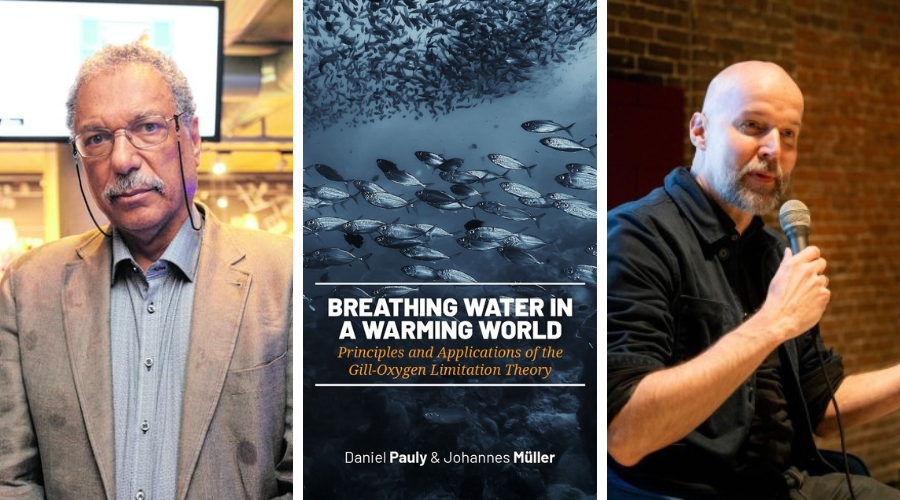
In Breathing Water in a Warming World (Sidestone Press), Daniel Pauly, principal investigator of the Sea Around Us initiative at the University of British Columbia, and Johannes Müller, assistant professor at the Leiden University Centre for the Arts in Society, not only explain the effects of climate warming on water-breathing animals, but they also explore the […]
