
By Quantitative Aquatics (Q-quatics)
In collaboration with the Marine Wildlife Watch of the Philippines (MWWP)
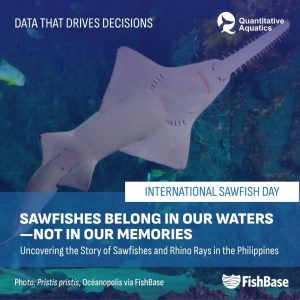
Uncovering the Story of Sawfishes and Rhino Rays in the Philippines
October 17, 2026 | International Sawfish Day
With their elongated, tooth-studded rostra, sawfishes are among the most extraordinary rays on Earth. Historically, these unique marine creatures inhabited Philippine lakes, rivers, estuaries, and coastal waters. However, today, sightings of sawfishes have become exceptionally scarce—serving as a stark warning about the fragility of our coastal marine biodiversity.
On this International Sawfish Day (October 17), Quantitative Aquatics (Q-quatics), in partnership with the Marine Wildlife Watch of the Philippines (MWWP), is highlighting the urgent need for science-based conservation, habitat protection, and public reporting to safeguard sawfishes and their close relatives, the rhino rays.
What Science Tells Us: Historical Presence and Declines
Globally, all five recognized sawfish species are assessed as Critically Endangered by the IUCN SSC Shark Specialist Group. In the Philippines, three species were historically documented:
- Largetooth sawfish (Pristis pristis)
- Green sawfish (Pristis zijsron)
- Knifetooth sawfish (Anoxypristis cuspidata)—historically recorded/possible
A comprehensive 2024 study led by Leeney et al. (Endangered Species Research, 53:97–113) surveyed local ecological knowledge by conducting 106 interviews across 31 Philippine sites. The research documented a profound historical decline in sawfish recollections and sightings over recent decades. Yet, the study also revealed vital evidence of recent presence, including reported observations from 2014 and photographic proof of a landed sawfish in 2015.
These findings underscore an essential truth in marine conservation science: the absence of recent sightings is not proof of national extinction.
Open Data, FishBase, and the IUCN Red List
Quantitative Aquatics (Q-quatics) plays a pivotal role in bridging marine science and public awareness.
To support species conservation worldwide, Q-quatics continuously documents and integrates IUCN Red List assessment data into FishBase. By regularly updating conservation status categories, species distributions, and ecological traits on FishBase, Q-quatics ensures that scientists, resource managers, policy makers, and conservationists have immediate, open access to verified, accurate, standardized biodiversity information. This global data integration helps highlight threatened species—like sawfishes and rhino rays—ensuring that national and regional management plans are grounded in verified scientific evidence.
Threats and the Connection to Rhino Rays
The dramatic decline of sawfishes stems primarily from incidental fishing mortality (bycatch), severe habitat degradation, destruction of critical mangrove nurseries, and physical alterations to rivers and estuaries.
Because sawfishes share these exact threats with other rhino rays—including Philippines’ 3 species of wedgefishes and 4 species of guitarfishes—protecting rhino rays now is essential to preventing similar ecological losses. Fortunately, all rhino rays receive full legal protection in the country under Fisheries Administrative Order 208-1 (2024).
“A sawfish sighting is valuable conservation information. Reporting it responsibly may help us understand whether these remarkable rays still survive in Philippine waters.”
— AA Yaptinchay, Executive Director, Marine Wildlife Watch of the Philippines
How You Can Help: Learn, Share, and Report
Restoring marine biodiversity requires collective action across coastal communities, fishers, students, researchers, and local officers. Here is how you can support sawfish and rhino ray conservation today:
- Report Historical or New Sightings: Have you seen a sawfish, an old sawfish rostrum (saw), or a rhino ray? Send a photo, approximate date, and location to MWWP’s Facebook group Shark Spotted Ph.
- Never Harm or Capture: Do not attempt to capture, buy, sell, or handle sawfishes to document them. If incidentally caught, safe release by trained personnel is critical.
- Protect Coastal Habitats: Advocate for the preservation and restoration of local mangroves, estuaries, and river systems that serve as vital habitats.
Sawfishes and rhino rays belong in our waters—not just in our memories. Together, through open science, community reporting, and habitat protection, we can keep their story alive in the Philippines.
