
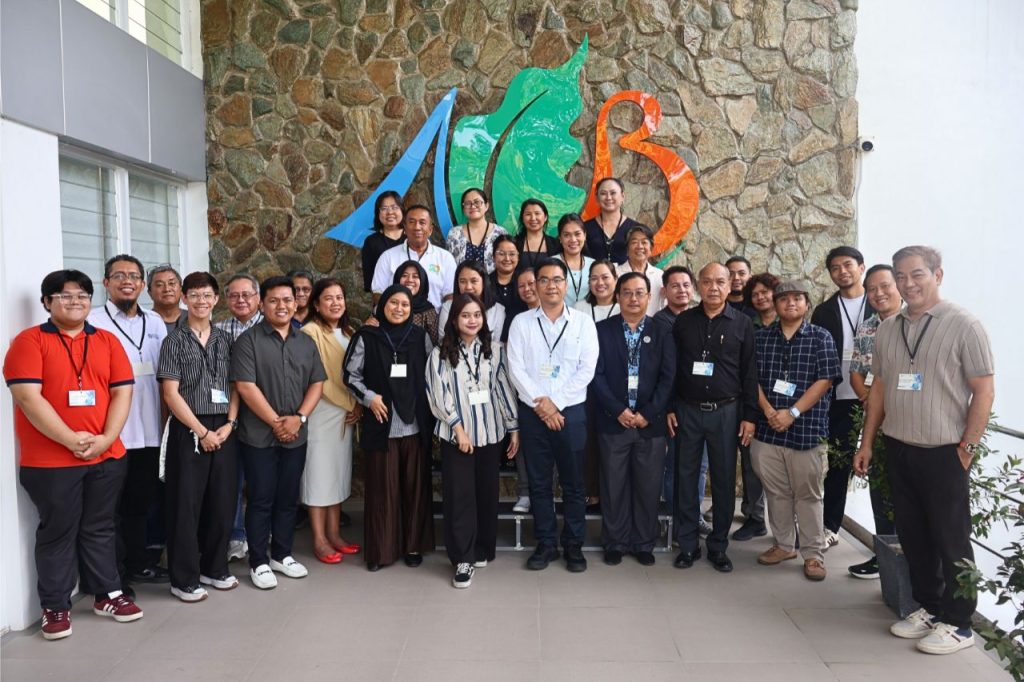
From May 4–5, 2026, Quantitative Aquatics (Q-quatics) joined the ASEAN Centre for Biodiversity (ACB) and other project partners for the “ASEAN ENMAPS Regional Workshop on MPA Network Design” held at the ACB Headquarters in Los Baños, Laguna. The workshop marked a milestone in establishing cohesive marine protected area (MPA) networks across the Large Marine Ecosystems (LMEs) of the ASEAN region.
Bringing together more than 20 consultants, marine scientists, biodiversity specialists, and technical experts from Thailand, Indonesia, and the Philippines, the workshop focused on translating scientific and socio-economic datasets into integrated spatial planning tools that support evidence-based MPA network design and management. Discussions centered on key ecological and governance parameters relevant to marine connectivity and conservation planning, including larval connectivity, fisheries profiles, and national management assessments.
A major component of the workshop involved the consolidation and spatial integration of datasets into marine planning maps and decision-support platforms to guide policy development and adaptive MPA management strategies.
Q-quatics’ Technical Contribution
Prior to the regional workshop, Q-quatics participated in a technical meeting where the team presented species distribution and species richness maps for the ENMAPS pilot sites. These support harmonization of foundational spatial datasets from project partners for integration into the ASEAN Biodiversity Dashboard, a platform intended to improve visualization and application of scientific information for marine conservation planning and management across the region.
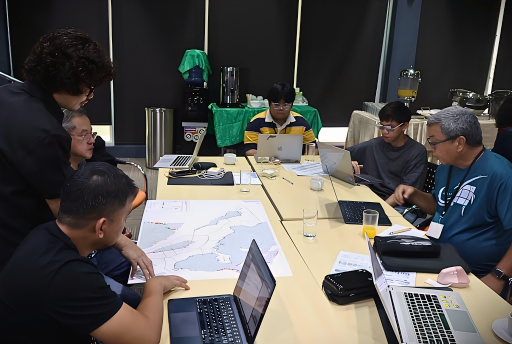
During the workshop, Q-quatics further presented fisheries species profiles for each pilot site, including data on pelagic larval durations, spawning periods, and juvenile recruitment pulses. These biological parameters are critical to understanding connectivity among MPAs and adjacent habitats, and identifying priority areas that can strengthen ecological coherence within MPA networks.
The Q-quatics delegation comprised Rudy Reyes, Kathy Reyes, and Jeremy Jansalin, who are engaged in the ASEAN ENMAPS Project — Effectively Managing Networks of Marine Protected Areas in Large Marine Ecosystems in the ASEAN Region. It is implemented by UNDP Asia and the Pacific with funding support from the Global Environment Facility (GEF), and with the ASEAN Centre for Biodiversity (ACB) serving as the executing agency.
